Școala de Muzică și Arte plastice nr. 5
The project responds to the need for a dedicated space for arts education, bringing together disciplines that were previously dispersed in improvised environments. More than a conventional school, the building functions as a platform for extracurricular activities, addressing both educational and social roles within the city.
Located in the Titan–Balta Albă district—an area marked by large-scale housing developments and a lack of urban identity—the project operates within a constrained framework defined more by administrative regulations than by architectural intent. Despite these limitations, the building avoids becoming an isolated object, instead using all available means to open itself towards the exterior and engage with its surroundings.
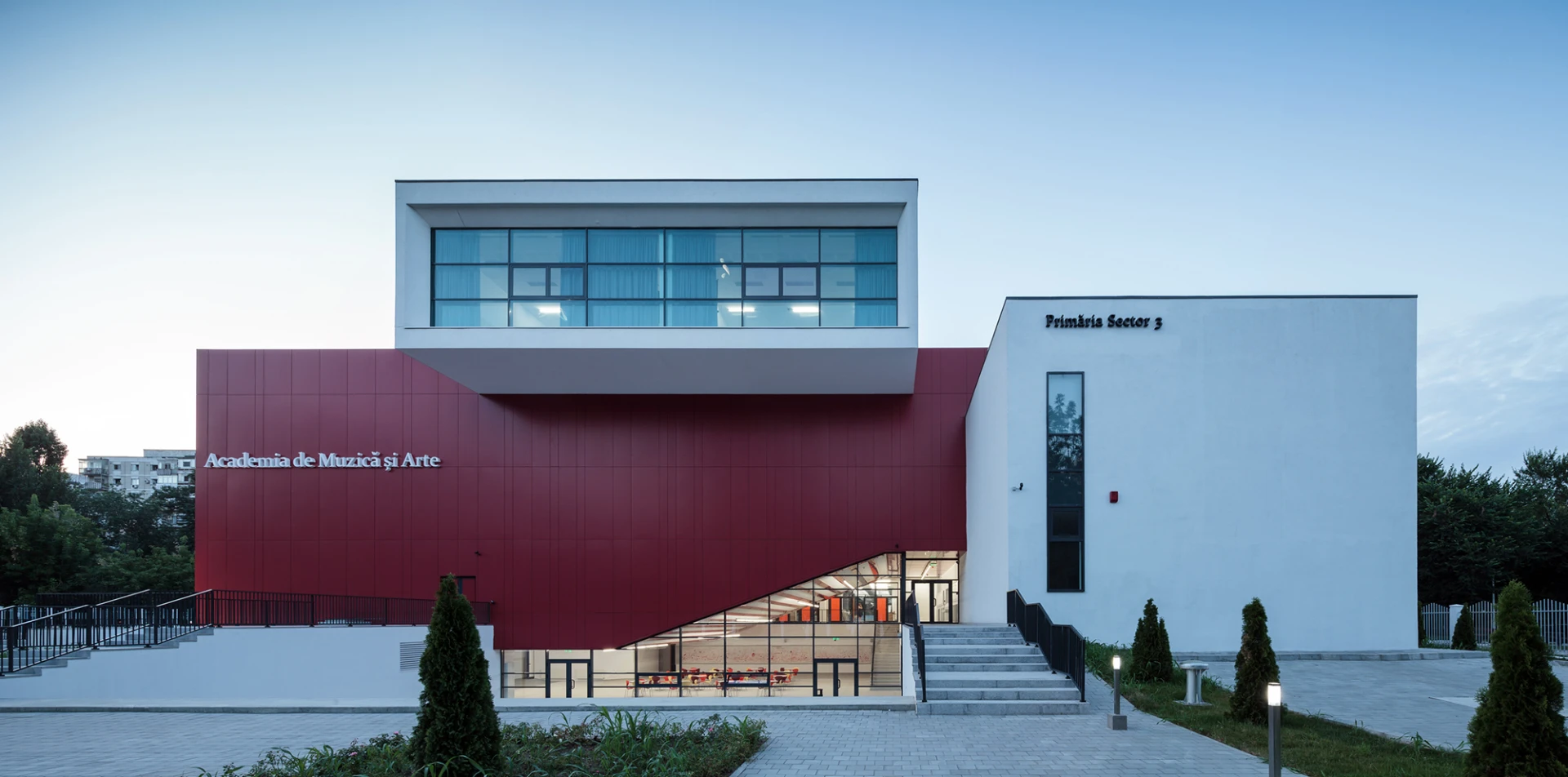
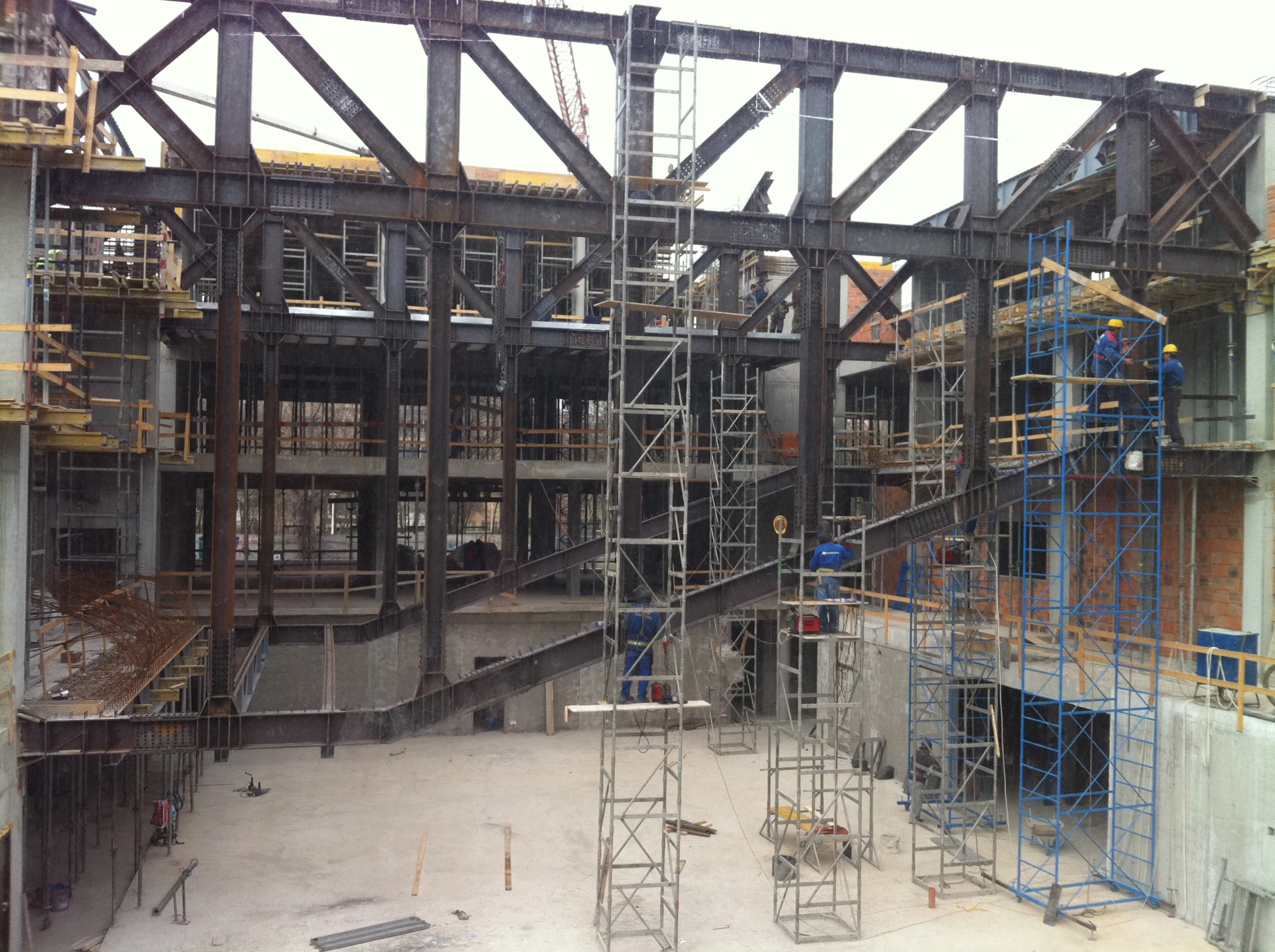
The architectural composition is based on a clear system of volumes. A white L-shaped body accommodates most of the educational spaces, while a distinct red volume, housing the performance halls, is suspended above the central forum. A third volume rises above, acting both as a functional extension and as an urban signal towards the street.
At the core of the project lies the forum—a flexible, light-filled space that extends from the underground level and connects the main functions of the building. Opening towards the exterior through fully glazed surfaces and performance terraces, it becomes the social heart of the school, capable of hosting a wide range of activities, from informal gatherings to public events.
The organization of spaces follows a clear functional logic: visual arts at ground level, music classrooms above—designed according to acoustic requirements—and performance and choreography spaces in the upper volumes. The project balances efficiency with spatial richness, offering layered views and connections between spaces, as well as a sense of openness rarely found in similar public buildings.
Beyond its functional role, the building aims to contribute to the cultural life of the neighborhood. In a context where valuable public architecture remains rare, such interventions carry a broader significance, having the potential to become active urban hubs and meaningful places for the community.
+ more details
- less details